
- Institution: University of Strathclyde
- Primary supervisor: Professor Edoardo Patelli
- Secondary supervisor: Dr Andrea Hamilton
- Industrial supervisor: Aldert Otter
- PhD student: Jittu Vinitha Jose
- Conducted in collaboration with ESB
Project summary
Meeting the UK and Irish governments’ 2050 carbon-reduction targets will require large-scale deployment of Floating Offshore Wind Turbines (FOWT). Concrete floaters are an attractive solution due to their low material cost and high potential for local supply, but traditional Portland cement—the key component of conventional concrete- has a significant carbon footprint. To fully decarbonise FOWT construction, alternative low-emission concretes must be developed and validated.
This project investigates whether such low-emission concretes can provide the strength and durability required for floating offshore wind turbines operating in harsh marine environments. It will assess alternative cementitious materials including fly ash, Ground Granulated Blast Furnace Slag (GGBS), calcined clays, and other industrial byproducts, alongside additives designed to enhance performance without compromising sustainability. The research will also evaluate material availability across the UK and Ireland, their potential carbon savings, and their suitability for large-scale deployment.
The work will combine a review of existing knowledge, engagement with industry to map material supply chains, laboratory testing of promising concrete formulations, and advanced modelling to understand long-term behaviour under offshore conditions.
The ultimate goal is to identify viable low-emission concrete solutions and design strategies that reduce carbon impact while ensuring durability, supporting the rapid decarbonisation of offshore wind infrastructure and contributing to the UK and Ireland’s transition to Net Zero.
Meet the researcher
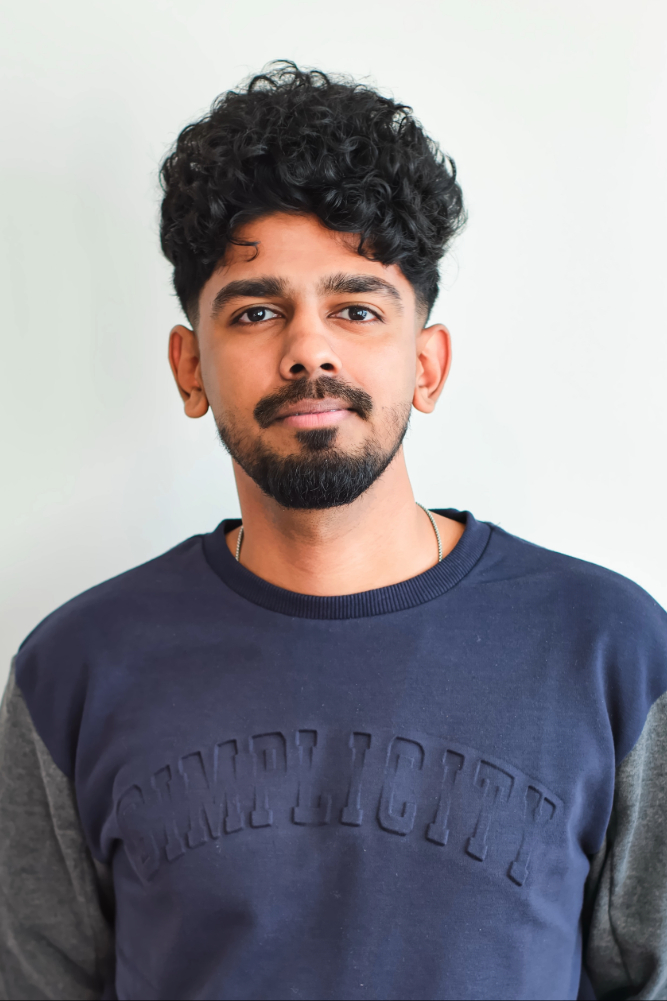
Hi, I’m Jittu. I started out with a Bachelors in Civil Engineering and went on to complete a Masters in Engineering Management at the University of Leicester, where I became deeply interested in low-carbon materials and the future of sustainable construction.
I’ve also worked hands-on across civil and logistics projects, giving me a practical perspective on how engineering decisions shape the world around us.
I’m driven by big challenges, and my research focuses on creating low-emission concrete solutions for floating offshore wind turbines – pushing the boundaries of sustainable infrastructure in collaboration with ESB.
For me, net zero isn’t just a target – it’s an engineering challenge. Creating low-carbon materials for offshore wind is my way of pushing us closer to that future.