
- Institution: Cranfield University
- Primary supervisor: Dr Ali Nabavi
- PhD student Cosmo Yun
- Conducted in collaboration with Origen Carbon
Project summary
As carbon emission targets become more demanding, the potential for scaling up direct air capture (DAC) technology is limited by energy demand, mass transfer constraints, and the stability of sorbent materials. In the short term, improvements in chemical engineering that boost process efficiency could have the greatest impact.
This innovative research with Origen Carbon aims to enhance the efficiency and scalability of DAC processes, using biogenic carbon dioxide capture as feedstock for producing e-fuels like sustainable aviation fuel (SAF) and methanol.
Research objectives:
- Develop novel strategies for reactor design and operation to improve DAC efficiency.
- Use Computational Fluid Dynamics (CFD) modelling to simulate and optimise gas-solid interactions and heat transfer within the system.
- Conduct comprehensive testing to evaluate the performance, stability, and regeneration behaviour of lime-based sorbents under realistic operating conditions.
The outcomes of this research will contribute to the development of more efficient, cost-effective DAC systems, playing a crucial role in achieving net-zero targets and driving the transition to low-carbon fuel production.
Meet the researcher
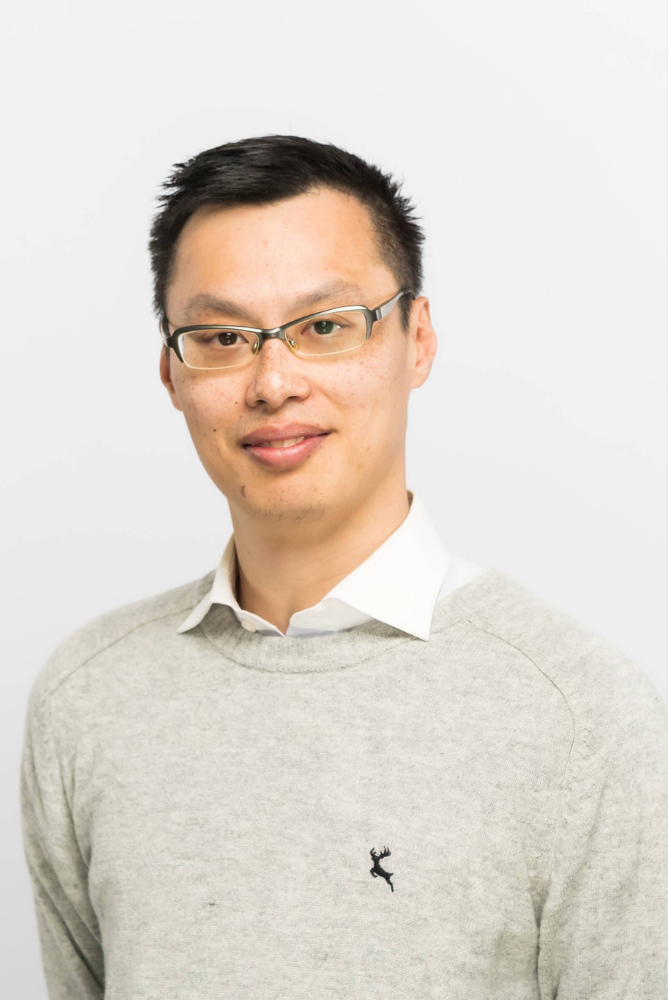
Hi, I’m Cosmo. I am an experienced researcher in materials science and engineering, with a background in industry and higher education, and I have a strong focus on process development, advanced materials characterisation, and applied energy systems.
In collaboration with my industrial sponsor, Origen Carbon, I am optimising the performance of lime-based DAC systems using CFD modelling and experimental validation, with the aim of enhancing reactor performance and mitigating sorbent degradation.
Achieving net zero depends crucially on scaling up deployment of decarbonisation technologies. I’m interested in overcoming these limitations by exploring the potential of materials, thermodynamics, and scalable engineering.